One size doesn’t fit all: Designing robots for the realities of everyday life
What do robots in the home actually look like?
The promise of robotics is a future where general purpose devices can complete tasks across workplaces and in the home. With so much investment going into the space, you’d think technology as fundamental as the hand would be resolved. But it’s not—there’s a foundational tradeoff in designing robotic hands.
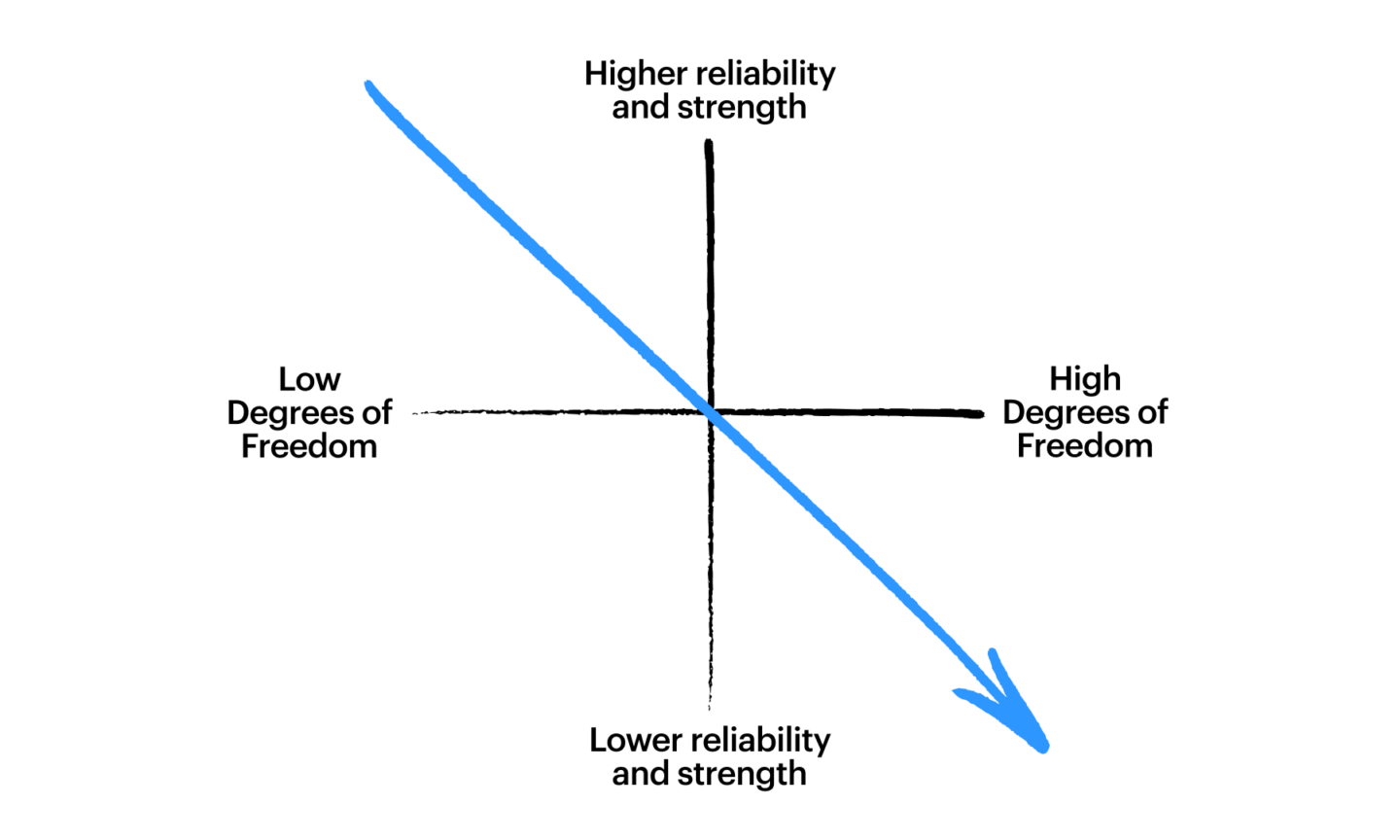
For any cost-effective design, increasing a hand’s fine motor control reduces its mechanical reliability and strength.
Many teams try to find a compromise between cost, degrees of freedom, and mechanical reliability, and are after the holy grail of a single hand that works for all use cases.
Achieving general purpose through modularity
So, if it’s expensive to have a single hand capable of tasks requiring both rugged strength and precision, how do we design robots to integrate into people’s routines and take on a wide range of everyday needs?
It’s clear that humans have designed our environments to account for our unique skillsets, accounting for different levels and challenges. Drawing on more than 40 years of experience designing for the home, we approached this speculative challenge through the lens of human-centered design.
Starting from the most common household tasks and paid services, we built a framework that sorted them into three categories, each defined by the qualities a hand would need. From there, we rapidly iterated on form factors and approaches for each.
From 10 feet to 10 inches
We created a product line up where each hand is covered by a different operational domain policy. Allowing the robot to first assess what it’s trying to do and then determine which hand is best suited for the task. This approach is well known in the industrial tool space; for example, in factories, many CNC machines and robotics already swap between tools depending on the job to be done. Bringing this technology to the home requires understanding a clear approach to solving a task without losing sight of the human benefit those tasks bring.
With a range of hands at their disposal, robots can more clearly take on tasks around the home. We put together some examples below.
Scout
A hand for the outdoors
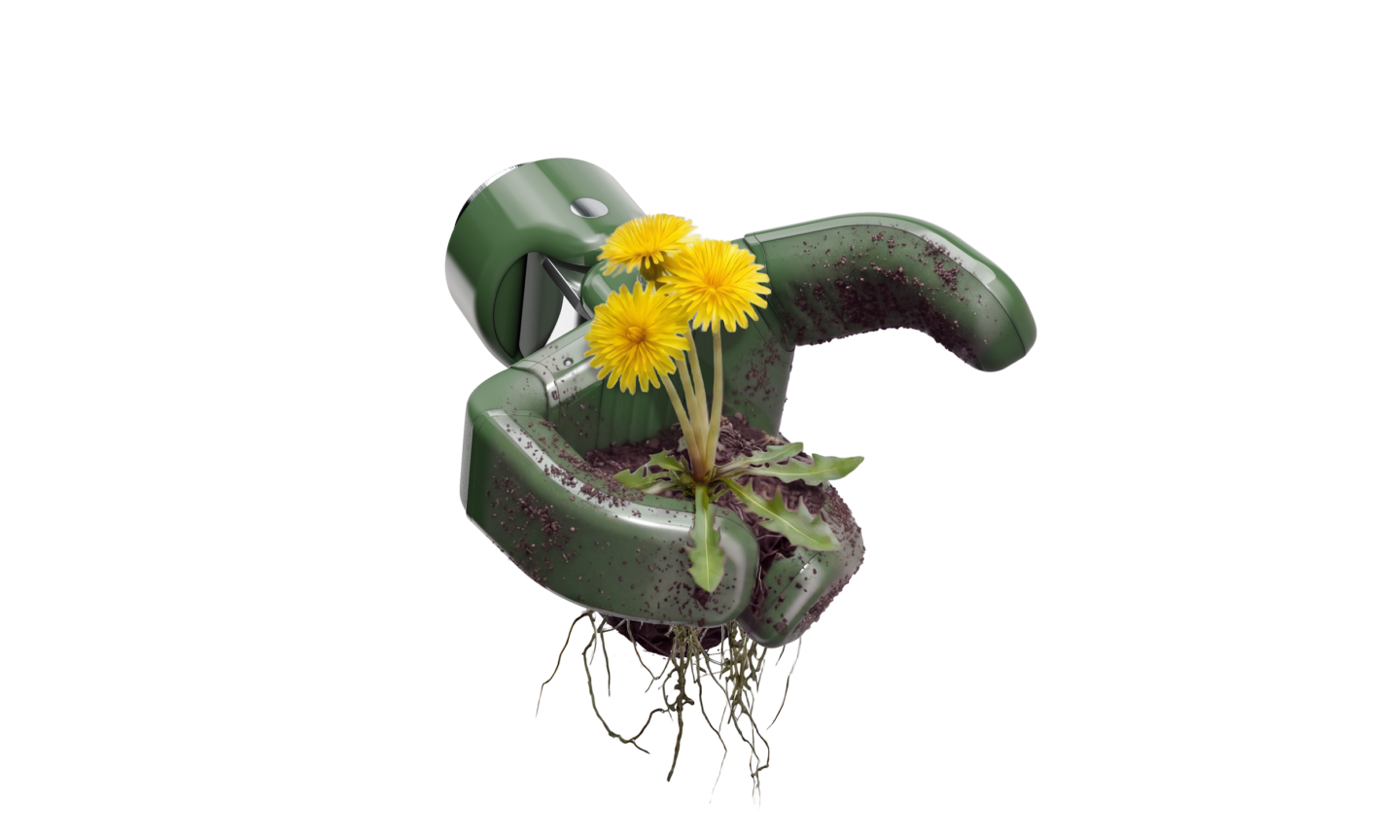
The Scout hand is built with three degrees of freedom, actuated at the base of its three fingers with visuotactile sensing in its finger pads. Designed for heavy duty, outside of the home use, it features a rubbery, durable grip and a waterproof outer surface. Whether a consumer needs help with lawn and garden maintenance or home repairs and heavy-duty cleaning, Scout is able to assist. As the strongest of the lineup, it handles all heavy lifting needs, inside and outside the home.
Flex
A hand for household upkeep
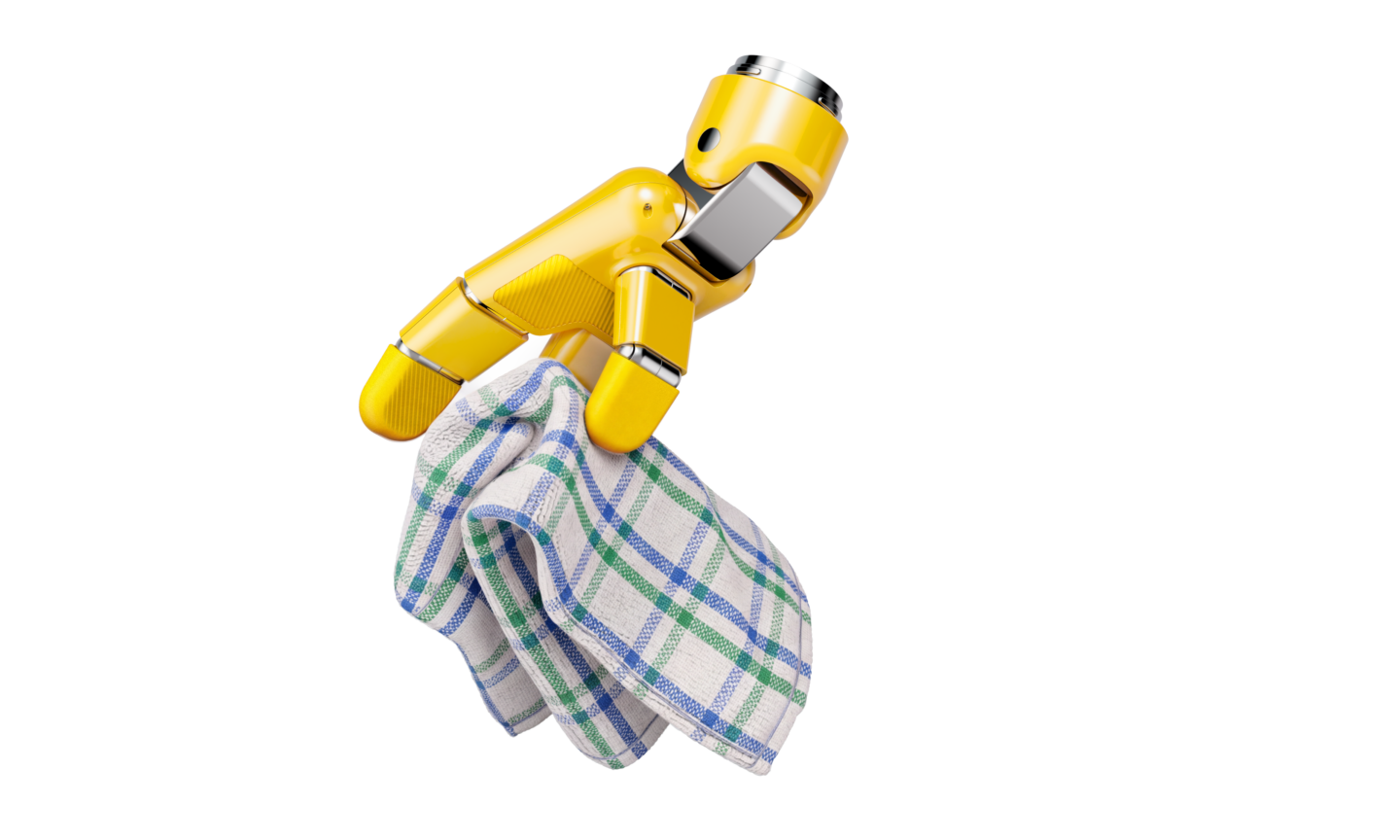
The Flex hand is built with six degrees of freedom, actuated at the base and middle of each of its three fingers with visuotactile sensing in its finger pads and palm. With three adaptable fingers, its designed to handle tasks of varying sizes. This is the hand for supplementing productivity and checking chores off a to-do list, like laundry, basic cleaning, and organizing.
Speck
A hand for making
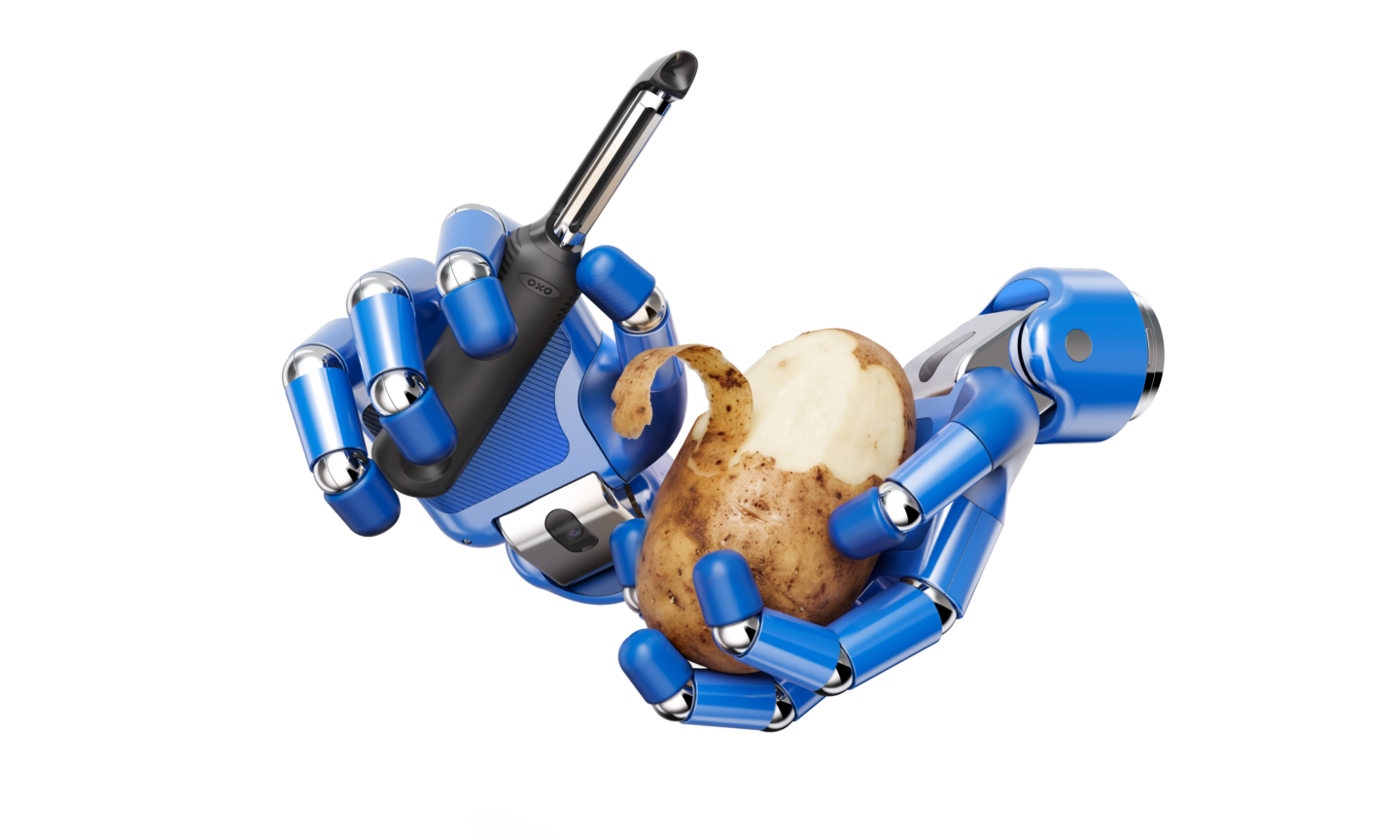
The Speck hand is built with twelve degrees of freedom, actuated at three points on each of its four fingers. Much like the Flex hand, it features sensing pads in its finger pads and palm, but has an added eye-hand camera to support particularly complex tasks. This built-in precision allows for Speck to complete complex tasks, including food preparation, cooking, and washing dishes. Speck is made from food-safe materials, giving consumers peace of mind as it handles even the smallest or most fragile of items.
Giving robots a toolbox of hands
In this future state we’ve imagined, fitting into the home requires more than functional capability. There’s also the question of how and where these at-home robots are changing out their hands. In a defined environment like the home, there’s no need for a machine to carry every end effector it might need, rather it should be able to select the tool best suited for each task as needed. We designed this station that operates as a home base for this, it naturally blends into the space it occupies, reading less like a piece of equipment and more like a new type of furniture.
What the future holds for household robots
By designing around the realities of how people live, we can rethink not just what robots are capable of, but how they become useful parts of our everyday environments. The future of household robots depends on design systems that understand what people need, adapt to each environment, and make tasks easier without adding unnecessary complexity. Our exploration shows how a human-centered approach can challenge conventional thinking, turning a technical limitation into an opportunity for a more thoughtful solution.
While this project is speculative, the design questions are very real. As robotics moves into the home, success will depend on more than engineering breakthroughs. It will require a deep understanding of human behavior, purposeful product design, and experiences that feel intuitive, useful, and at home in people’s lives.