Electrifying at scale
Aligning fleets, utilities, and the future of energy
EPRI
-
ClientEPRI
-
IndustryMobility, Electrification
-
ServicesUX/UI, Platform Development, Strategy and Research
The Opportunity
Charging ahead shouldn’t require guesswork
The Electric Power Research Institute (EPRI) is an independent, non-profit organization that collaborates with industry, academia, and government to help tackle global energy challenges and provide society with more affordable, reliable energy solutions. They made a commitment to support the rapid deployment of millions of electric vehicles by 2030, while minimizing impacts to the utility grid.
Essential to that goal is for large-scale commercial fleets to transition from gasoline or diesel-powered vehicles to electric, this process is known as electrification. EPRI recognized the overall process was too slow, but wanted a deeper understanding of where in the electrification journey the friction was coming from.
Big fleets. Bigger grid questions.
Fleet electrification requires close coordination between EV fleet customers (i.e. FedEx), utilities, and charging providers. The challenges around grid capacity are complex, the tools and processes to support early, collaborative planning are fragmented and difficult to navigate.
Recognizing this gap, EPRI saw an opportunity to reimagine how utilities and fleet customers engage earlier in the electrification journey. EPRI partnered with Smart Design to understand the EV customer experience and define a vision for how large-scale electrification can become faster, more predictable, and more cost-effective for all parties involved.
Our Process
Uncovering the friction behind the plug
Our work began with deep discovery across the fleet electrification ecosystem. We started with landscape research and interviews with subject-matter experts to understand the broader system, its constraints, and where existing processes broke down. To map the real-world journey, we conducted one-on-one interviews with fleet operators, charging service providers, and utilities. We examined how they interact, make decisions, and exchange information across the electrification process. This helped us identify where critical information was missing and where better coordination could improve outcomes.
Mapping the messy middle of electrification
To map the real-world journey, we conducted one-on-one interviews with fleet operators, charging service providers and utilities. We examined how they interact, make decisions, and exchange information across the electrification process, identifying needs and pain points at critical moments. We found that as electrification processes accelerate, utilities are increasingly confronted with large, complex EV load requests from commercial and municipal customers. For large fleet operators, this disconnect can lead to unrealistic schedules, unexpected capital expenses, and stalled electrification goals. For utilities, it can create operational strain, misaligned expectations, and reactive decision-making rather than proactive system planning.
For example, for EV customers the timeline from project kickoff to deploying vehicles and chargers can range anywhere from six months to two years. However, for those large grid capacity load requests, a utility might need to upgrade a substation, which could cost $50 million and take 5 to 7 years—time and money that many EV customers aren’t realizing is needed.
From these insights, we reframed the challenge from a technical problem to a planning and communication problem. Together with EPRI, we explored how earlier engagement, clearer signals, and shared visibility could fundamentally improve outcomes for both utilities and customers.
Our Solution
From reactive planning to proactive electrification
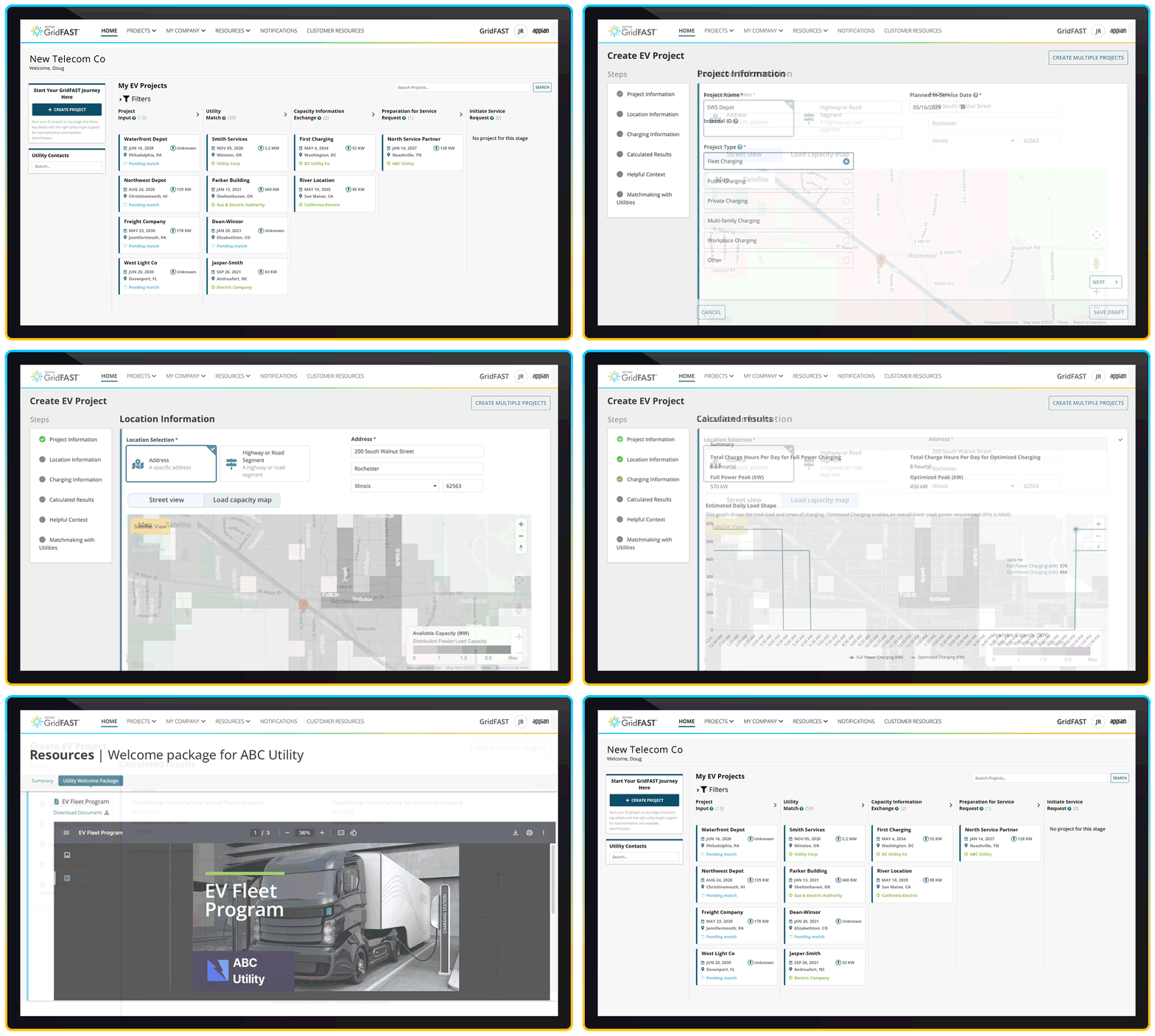
The work resulted in a clear, actionable vision for transforming how utilities, charging providers, and fleet customers plan large-scale electrification projects. At the core of this vision is GridFast: the platform concept designed to shift electrification planning upstream, enabling earlier collaboration, better forecasting, and more informed decision-making.
With the 15 identified pain points in mind, we developed a portfolio of 10 integrated concepts that address the most critical needs on both sides of the equation. These include tools like a Grid Readiness Score, which gives EV customers visibility into potential site locations and grid capacity through an interactive map. As well as a Project Confidence Scale, which evaluates key variables to help utilities and customers assess the likelihood, cost, and timing of proposed projects.
Another key output of this work was a platform roadmap. For each of the 10 concepts, we identified whether it should be part of the beta, the V1 launch, or a longer-term release. For concepts planned for later phases, we also outlined the planning and data integrations that could begin in year one to build the foundation for those future capabilities.
The Impact
Aligning fleets, utilities, and the future of energy
Our work with EPRI gave them the strategic vision they needed to move the platform forward, allowing them to launch the first version of GridFast in 2025. By introducing standardized processes and facilitating early information exchange between utilities, charging providers, and EV customers, GridFast enables more realistic timelines, reduces costly surprises, and supports more proactive grid investments. For utilities, this means improved planning confidence and the ability to prioritize infrastructure upgrades more strategically. For fleet operators, it creates a clearer, faster path from ambition to execution.
Ultimately, the project reframes fleet electrification from a reactive, high-risk process into a coordinated planning system. One that accelerates adoption, improves outcomes, and strengthens the foundation for a more resilient electric future.