Redefining the point of care with movable MRI
Bringing life-saving technology to the bedside.
Hyperfine
-
ClientHyperfine
-
IndustryHealthcare
-
ServicesIndustrial design
The Opportunity
Unlocking mobility in a traditionally fixed system
Hyperfine set out to make brain imaging more accessible by rethinking the traditional MRI, transforming it from a fixed, room-bound system into a portable, point-of-care device. Their goal was to bring MRI technology directly to patients, whether in hospitals, rural clinics, or emergency environments.
With their first-generation device already in the field, Hyperfine engaged Smart Design to help evolve the next generation. As an engineering-led organization, they had built a strong technical foundation but had yet to fully integrate design into their development process. We joined as an embedded design partner, helping them establish the value of user-centered thinking across the organization.
Our Process
Design meets engineering, and stays there
Our teams worked in a highly iterative cadence, allowing design and engineering to evolve together. In tandem with Hyperfine’s engineering team, we built a shared understanding of what good design looks like and why it matters. Over time, engineers began to adopt a user centered perspective, becoming advocates for usability and experience within their own workflows.
We often brought the experience into the hallways of our studio with full-scale printouts and physical mockups simulating real hospital conditions, tight corners, and varied transport scenarios. This approach helped define what aspects of the experience were essential when being used and could not be compromised on. It also created space to rethink core elements of the device.
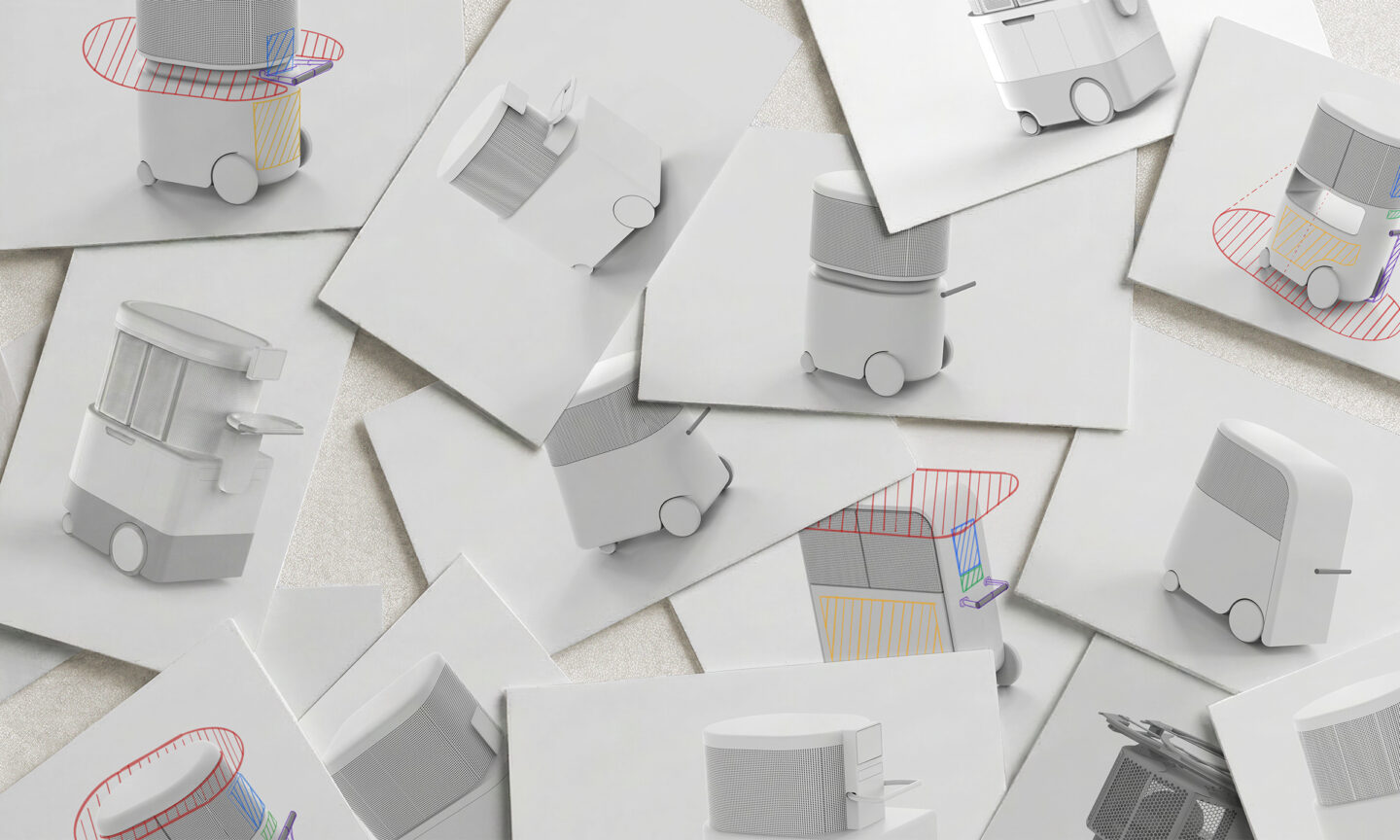
Defining the architecture
Reimagined the overall form to communicate mobility, approachability, and safety through design details.
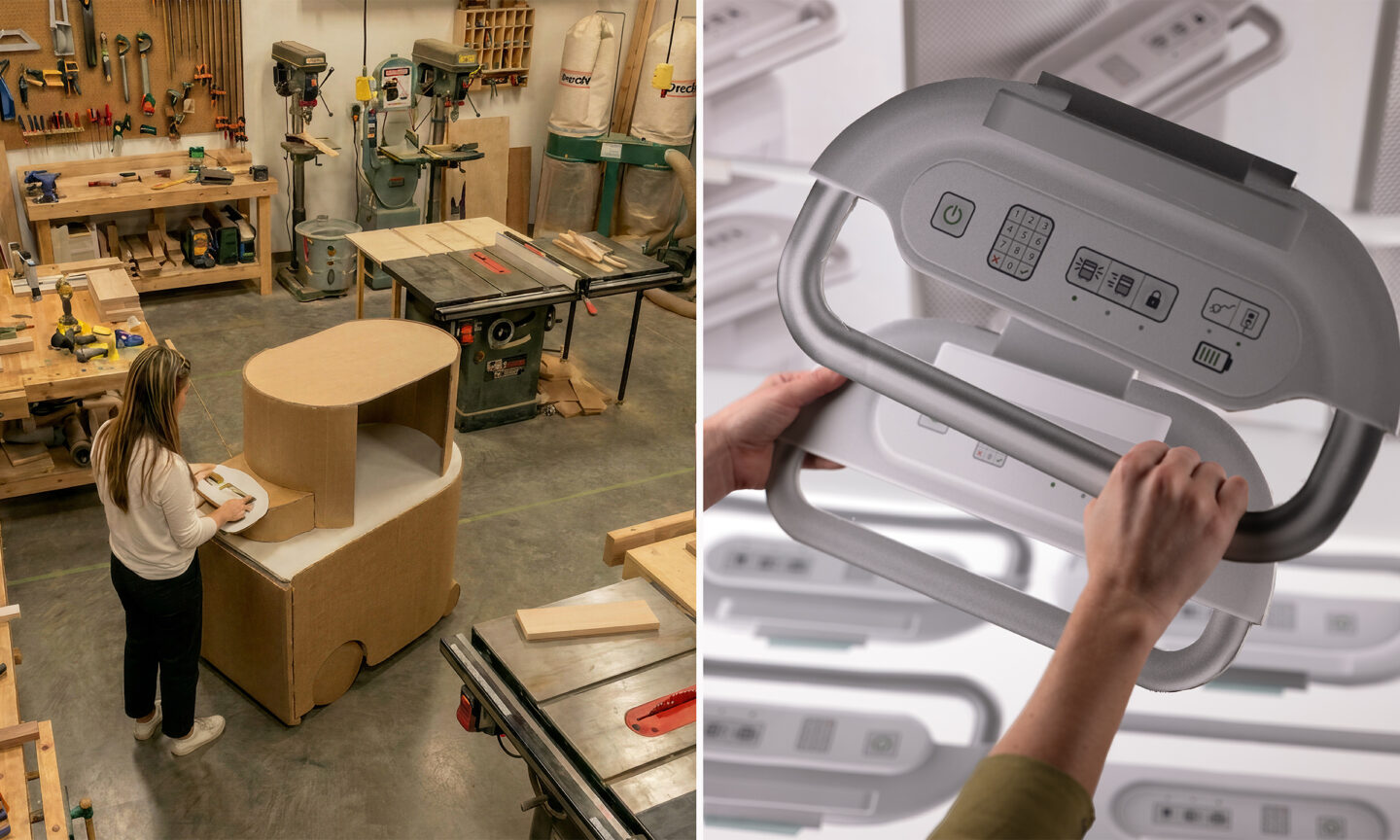
Operator experience
Operator touchpoints were further developed to ensure the device can be used regardless operator gait, while also being navigable in real-world conditions.
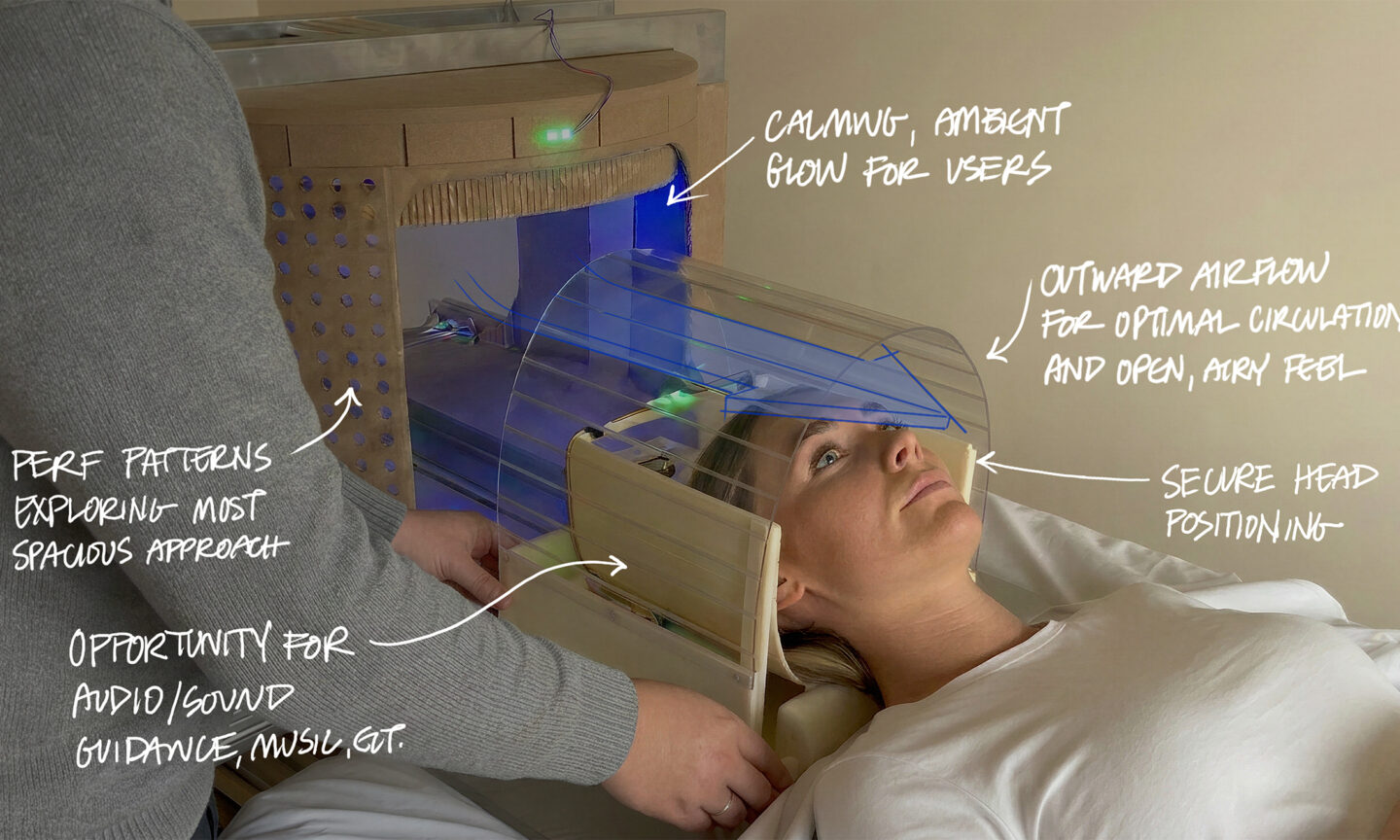
Patient experience
Refined RF screen and headrest to create a more open, reassuring MRI experience while meeting strict requirements.
The Impact
Embedding design into Hyperfine’s DNA
The final design represents a meaningful step forward in making portable MRI technology more usable, adaptable, and human-centered. Just as important, it reflects and internal shift within Hyperfine. Design is now embedded in how the team approaches problem-solving, with engineers who understand and advocate for the user experience.
By improving how the device moves through the world and how people interact with it, the design helps extend MRI access beyond traditional settings. It supports a broader vision of healthcare that is more flexible, more responsive, and more focused on the needs of patients and those who care for them.